
What Is Sewing Thread Count and How Do Tex, Denier, and Ticket Number Compare?
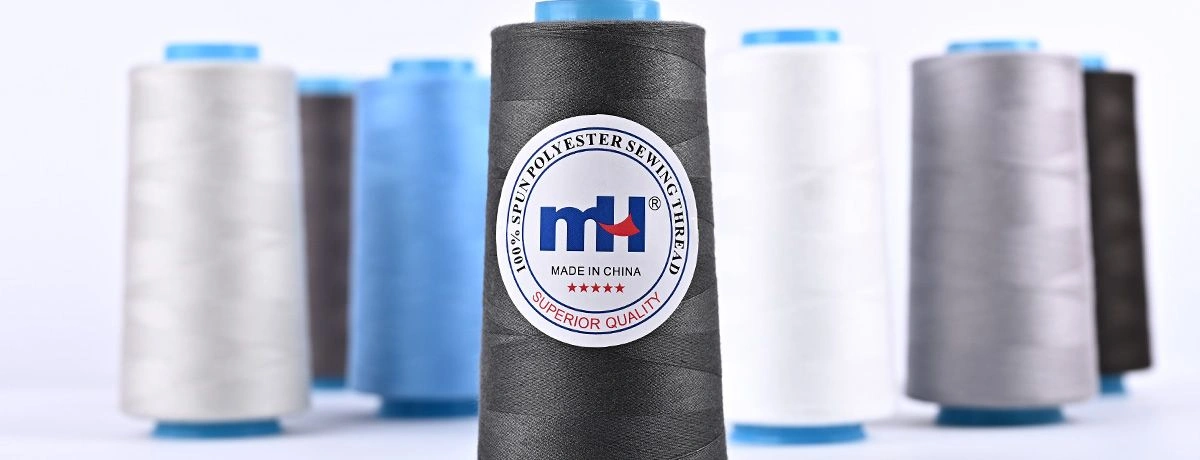
Choosing the right sewing thread is essential for producing strong seams, smooth stitches, and durable finished garments. However, because the global thread industry uses several different numbering systems—including Tex, Denier, Metric Count, Cotton Count, and Ticket Number—many buyers find thread selection confusing.
This guide explains everything you need to know about sewing thread count, how the main systems differ, and when each should be used. We also include a complete Tex / Denier / Ticket No. conversion table and show how these standards apply to MH’s polyester spun thread, filament thread, and core-spun thread.
By the end, you’ll be able to choose the right thread quickly and accurately for any garment, fabric, or sewing machine.
What Is Sewing Thread Count?
Sewing thread count refers to how a thread’s thickness, weight, and strength are measured, with the thread's thickness being a key property. Generally, different numbering systems are used in the industry to describe thread count:
-
Fixed-length systems — measure how much a specific length of thread weighs; for example, Tex is expressed in grams per 1000 meters, and Denier is expressed in grams per 9000 meters.
-
Fixed-weight systems — measure how much length is produced from a given weight; for example, Cotton Count and Metric Count are expressed in meters or yards per gram or pound.
-
Commercial numbering systems — simplify sizing for users (Ticket Number).
Thread count affects:
-
Stitch appearance
-
Seam durability
-
Machine speed and performance
-
Compatibility with needle size and fabric weight
Understanding these systems helps you choose the right thread for both home sewing machines and industrial production.
Fixed-Length Systems: Tex Size & Denier System
Fixed-length systems measure the weight of a defined length of thread, making them the most accurate for modern manufacturing. Tex measures the weight in grams per 1000 meters of yarn length, providing a standard for thread thickness.
The Tex system is widely used in the textile industry. The 'tex number' is the value used to indicate thread size, and it is expressed as the weight in grams per 1000 meters of yarn length. Higher tex numbers mean thicker and heavier thread.
Similarly, the Denier system is another fixed-length measurement, expressed as the weight in grams per 9000 meters of yarn length. Both Tex and Denier systems are based on a specific yarn length, allowing for consistent and comparable thread sizing across different products and regions.
1 Tex Size — The ISO Standard for Thread
Tex is the weight in grams of 1,000 meters of thread.
-
Higher Tex → thicker, stronger thread
-
Lower Tex → finer, smoother stitches
Tex is widely used for both single yarn and twisted yarn, and is now the most recognized international standard.
MH supplies sewing threads across a full Tex range, including:
-
Polyester Spun Thread: Tex 12–80
-
Polyester Filament Thread: Tex 18–90
-
Polyester Core-Spun (PC) Thread: Tex 20–60
These threads are optimized for both medium- and high-speed sewing machines.
2 Denier System — Popular for Filament Threads
Denier (D) measures the weight in grams of 9,000 meters of thread.
It is commonly used for:
-
Filament threads
-
Heavy-duty industrial threads
Tex ↔ Denier Conversion:
-
Tex = Denier ÷ 9
-
Denier = Tex × 9
Examples:
-
70D → very fine
-
150D–300D → bags, tents, home textiles
-
500D+ → upholstery, leather goods
MH’s filament threads include:
-
150D/2, 210D/2, 250D/3, 300D/3, etc., offering high strength and excellent abrasion resistance.
Fixed-Weight Systems: Cotton Count & Metric Count
1 Cotton Count (Ne)
Used in the English cotton system.
-
Measures how many hanks of 840 yards weigh one pound
-
Higher number = finer thread
2 Metric Count (Nm)
-
Nm = meters per gram
-
Higher value = finer thread
These systems are still referenced by some mills and buyers but are gradually replaced by Tex in modern manufacturing.
Ticket Number — The Commercial Sizing System
Ticket Number is the most common label seen on retail and industrial thread packaging, but it is not a technical unit. It loosely corresponds to Tex or Denier but varies between brands.
The Ticket Number system offers an easy approximation of thread size, making it accessible for users who may not be familiar with technical units. It helps users select the specific size of thread needed for their application.
Common examples:
-
Ticket 80 → Tex 18–20
-
Ticket 60 → Tex 30
-
Ticket 40 → Tex 40
-
Ticket 20 → Tex 60–70
-
Ticket 10 → Tex 135
MH uses Tex + Ticket No. together to ensure global compatibility.
Complete Tex / Denier / Ticket Number Conversion Table (MH-Optimized)
This table combines the most commonly used thread sizes across the apparel, leather, upholstery, and industrial sewing sectors.
Note: Ticket Numbers vary slightly among manufacturers. Tex and Denier are absolute standards.
Tex / Denier / Ticket Number Conversion Table
|
Tex Size |
Approx. Denier (D) |
Typical Ticket No. |
Thread Category Example |
Common Applications |
|---|---|---|---|---|
|
Tex 10 |
90D |
Ticket 120–100 |
Fine spun polyester |
Fine stitching, lightweight fabrics |
|
Tex 12 |
110D |
Ticket 100–90 |
Spun or core-spun |
Shirts, blouses |
|
Tex 15 |
135D |
Ticket 80–70 |
Filament / fine spun |
Home sewing machines |
|
Tex 18 |
160D |
Ticket 80 |
Polyester spun / filament |
Lingerie, thin fabrics |
|
Tex 20 |
180D |
Ticket 80 |
Polyester spun |
Kidswear, shirts |
|
Tex 24 |
220D |
Ticket 60 |
Core-spun / spun |
Knitwear |
|
Tex 30 |
270D |
Ticket 60–50 |
Spun / PC thread |
T-shirts, dresses |
|
Tex 36 |
320D |
Ticket 50–40 |
Filament (210D/2) |
Light denim, uniforms |
|
Tex 40 |
360D |
Ticket 40 |
Spun / PC thread |
General garment sewing |
|
Tex 45 |
400D |
Ticket 36–30 |
Filament (250D/2) |
Sportswear |
|
Tex 50 |
450D |
Ticket 30 |
Spun / core-spun |
Outerwear |
|
Tex 60 |
540D |
Ticket 20 |
Spun / PC thread |
Denim, heavy fabrics |
|
Tex 70 |
630D |
Ticket 20–15 |
Filament (300D/2) |
Bags, light upholstery |
|
Tex 80 |
720D |
Ticket 15–20 |
Heavy-duty spun thread |
Shoes, canvas |
|
Tex 100 |
900D |
Ticket 10–15 |
Bonded / filament |
Leather goods |
|
Tex 135 |
1215D |
Ticket 10 |
Heavy-duty core-spun |
Sofa, luggage |
|
Tex 210 |
1890D |
Ticket 5 |
Industrial bonded thread |
Harness, tarpaulin |
How to Choose the Right Sewing Thread Count
1 Based on Fabric Weight
|
Fabric Type |
Recommended Tex |
|---|---|
|
Lightweight (silk, lining) |
Tex 18–30 |
|
Medium-weight (T-shirts, uniforms) |
Tex 30–40 |
|
Heavy (denim, canvas) |
Tex 60–80 |
|
Extra heavy (leather, upholstery) |
Tex 100–135+ |
2 Based on End Product
-
Shirts, blouses → Tex 24–30
-
Casual wear, dresses → Tex 30–40
-
Jeans, workwear → Tex 60–80
-
Shoes, upholstery, luggage → Tex 135–210
3 Matching Thread & Needle Size
|
Tex |
Needle Size |
|---|---|
|
Tex 20 |
75/11–80/12 |
|
Tex 30 |
90/14 |
|
Tex 40 |
90/14–100/16 |
|
Tex 60 |
100/16–110/18 |
|
Tex 80 |
110/18–120/19 |
|
Tex 135 |
120/19–130/21 |
Correct pairing ensures smooth stitches and prevents thread breakage.
MH Sewing Thread Solutions for Every Application
MH offers a complete range of high-quality sewing threads customized for global garment and textile industries:
✔ Polyester Spun Sewing Thread
-
Consistent quality
-
Low hairiness
-
Suitable for shirts, home textiles, casual wear
✔ Polyester Filament High-Strength Thread
-
Excellent tensile strength
-
Ideal for bags, shoes, leather products
✔ Polyester Core-Spun (PC) Thread
-
Polyester filament core + spun polyester cover
-
High abrasion resistance
-
Perfect for denim and uniforms
MH provides:
-
300+ colors in stock
-
Custom dyeing services
-
Multiple Tex sizes & Ticket No. labeling
-
Technical recommendations for sewing machines & fabrics
Summary
-
Tex → most accurate and internationally standardized
-
Denier → mainly for filament threads (easy Tex conversion)
-
Cotton Count & Metric Count → older systems still used by mills
-
Ticket Number → convenient but variable
-
Using the correct sewing thread count ensures superior stitch quality and production efficiency
MH’s professional sewing threads help manufacturers achieve stable, high-performance sewing results across all product categories.
Need Help Choosing the Right Thread? Contact MH
MH’s technical team can help you select the ideal thread count, Tex size, and thread type for your fabric and sewing machine requirements.