
Why Is Sewing with Nylon Thread Used in Industrial Manufacturing?
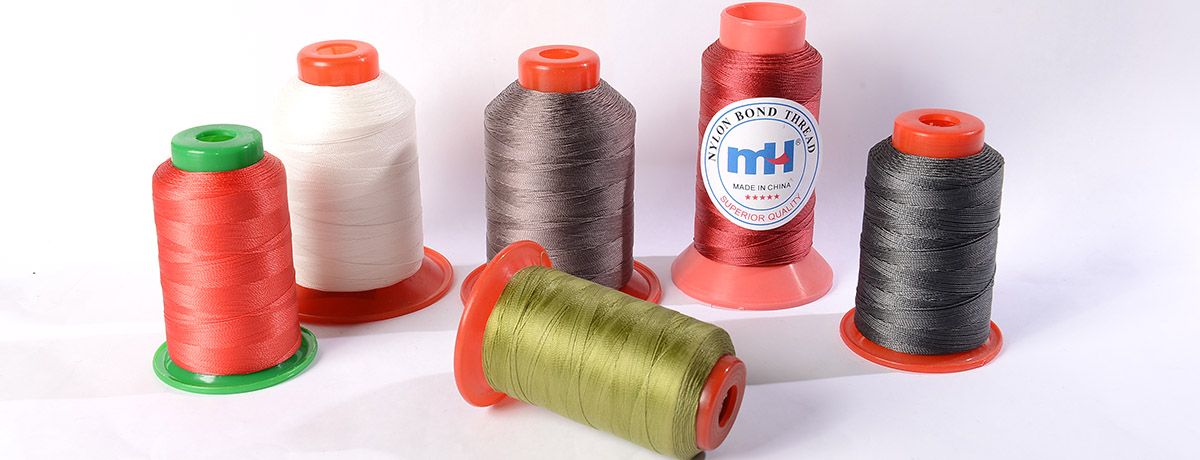
Industrial manufacturing demands threads that deliver consistent performance under extreme conditions. Nylon thread has emerged as the preferred choice for manufacturers seeking superior strength, elasticity, and durability in high-volume production environments. Unlike traditional cotton thread or standard polyester thread alternatives, nylon provides the mechanical properties essential for demanding applications ranging from automotive textiles to technical outdoor gear, where nylon fabric is commonly paired with nylon thread to enhance durability in industrial and high-stress applications.
This comprehensive guide examines the critical aspects of sewing with nylon thread in factory operations. From understanding the fundamental characteristics that make nylon superior to other synthetic fibers, to implementing quality control protocols that ensure consistent seam performance, manufacturers will find the technical specifications and best practices necessary for optimizing their production processes.
For procurement professionals managing bulk thread requirements across global manufacturing operations, understanding nylon thread’s capabilities and implementation requirements directly impacts product quality, production efficiency, and long-term cost management. The following analysis provides the technical foundation for making informed decisions about nylon thread adoption in industrial sewing applications.
What is Nylon Thread and Why Use It in Industrial Sewing
Nylon thread represents a synthetic polyamide filament engineered specifically for applications demanding superior mechanical performance compared to natural fiber alternatives. The polymer structure of nylon fibers creates inherent elasticity and tensile strength characteristics that distinguish it from cotton thread, polyester thread, and other conventional sewing materials used in manufacturing environments.
The fundamental advantage of nylon thread lies in its unique combination of high tensile strength and controlled elasticity. While cotton thread provides familiarity and ease of handling, it lacks the strength required for heavy-duty applications. Polyester offers strength but limited stretch capacity. Nylon thread bridges this gap by delivering both superior strength and the flexibility necessary for products experiencing mechanical stress during use. It is important to select a thread that matches the fabric type and application requirements to ensure optimal seam durability and performance.
Key advantages that drive manufacturers to choose nylon include:
-
Superior tensile strength enabling secure seams in high-stress applications
-
Excellent abrasion resistance extending product lifespan in demanding environments
-
Chemical resistance providing stability when exposed to cleaning agents, saltwater, and industrial chemicals
-
Controlled elasticity accommodating fabric movement without seam failure
-
UV resistance maintaining strength and color integrity under prolonged sun exposure
Bonded nylon thread is often used in industrial settings because the bonding process coats the fibers, reducing fraying and improving durability. The difference between bonded and non-bonded nylon thread is that bonded thread has a protective coating, making it less likely to unravel and a good choice for high-speed sewing or heavy-duty applications, while non-bonded thread may be more suitable for lighter tasks.
Cost-effectiveness emerges as a significant factor in high-volume production runs. While nylon thread commands a premium over basic cotton thread, its durability reduces warranty claims and product failures. Manufacturing facilities processing thousands of units monthly find that the reduced defect rates and extended product lifespans justify the higher thread cost through improved total cost of ownership.
The synthetic nature of nylon also provides consistency advantages critical for industrial operations. Unlike natural fibers that exhibit variation in strength and characteristics, nylon thread maintains uniform properties across production batches, enabling predictable machine settings and consistent seam quality throughout extended manufacturing runs.
Key Characteristics of Industrial Nylon Thread
Understanding the technical specifications of nylon thread enables manufacturers to optimize their sewing processes and ensure compatibility with specific fabric types and application requirements. Industrial-grade nylon thread exhibits measurable characteristics that directly influence its performance in production environments.
Tensile strength represents the most critical specification for industrial applications. Nylon thread typically demonstrates tensile strength ranging from 2.5 to 8.5 pounds depending on thread size, significantly exceeding the capabilities of cotton thread or standard polyester alternatives. This strength enables secure seams in applications where thread failure would compromise product integrity or user safety.
Elongation properties distinguish nylon from rigid thread materials. Industrial nylon thread exhibits controlled elongation of 15-25% before breaking, meaning the thread can stretch up to a quarter of its length before it will break under tension. This ability to elongate before breakage is crucial for preventing seam failure, especially in stretch fabrics, activewear production, and applications where products experience repeated flexing or tension cycles.
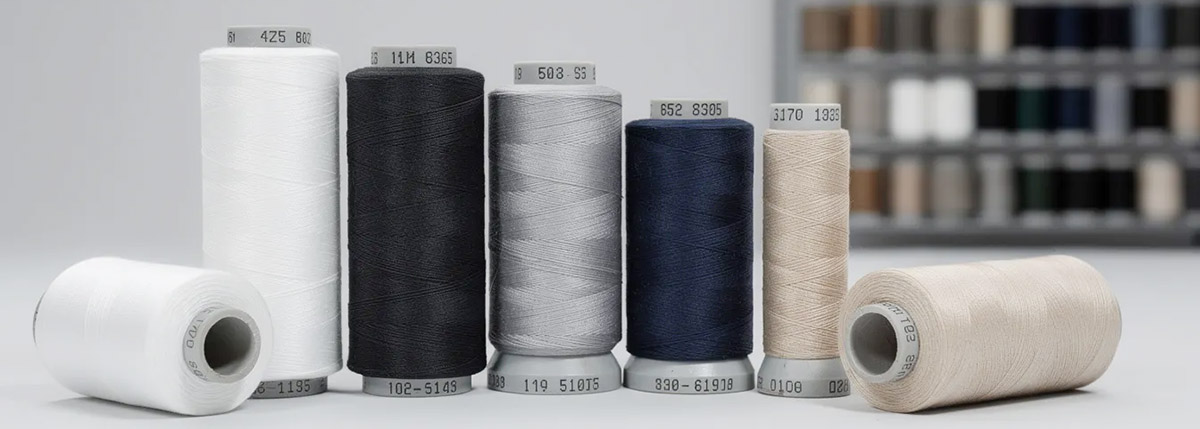
Temperature resistance specifications indicate nylon thread’s operational limits in manufacturing and end-use environments. Most industrial nylon threads maintain performance characteristics up to 150°C (302°F), accommodating normal pressing and finishing operations while providing adequate margin for products exposed to elevated temperatures during use.
UV resistance and colorfastness represent critical specifications for outdoor applications and products requiring long-term color stability. Industrial nylon thread typically meets or exceeds AATCC colorfastness standards, ensuring that thread color remains stable throughout the product lifecycle even under intense UV exposure.
Moisture absorption characteristics affect both manufacturing processes and end-product performance. Nylon thread typically absorbs 2-4% moisture under standard atmospheric conditions, significantly less than cotton thread but enough to require consideration in environments with high humidity where dimensional changes could affect tension settings during sewing.
Types of Nylon Thread for Manufacturing
Industrial manufacturing requires different nylon thread variants optimized for specific applications and fabric types. Understanding the characteristics of each type enables manufacturers to select the appropriate thread for their production requirements while optimizing both performance and cost-effectiveness.
Bonded nylon thread represents the primary choice for heavy-duty industrial applications. The bonding process applies a protective resin coating that reduces fraying during sewing while maintaining the thread’s inherent strength and elasticity. Bonded nylon thread excels in applications involving heavy fabrics, outdoor products, and items requiring exceptional seam durability. The bonding agent also reduces thread stretch during sewing, improving stitch consistency in high-speed production environments. For applications demanding even greater strength and heat resistance, such as parachutes or reinforced seams in ripstop nylon, kevlar thread is often chosen as an alternative to bonded nylon.
Textured nylon thread serves specialized applications in stretch fabrics and activewear production. The texturing process creates surface irregularities that enhance the thread’s grip within fabric while maintaining excellent stretch recovery characteristics. This type proves particularly valuable in swimwear, athletic apparel, and lingerie manufacturing where both strength and elasticity are essential for product performance.
Monofilament thread constructed from nylon provides nearly invisible stitching for applications where seam visibility must be minimized. This single-filament construction requires specific handling procedures and needle selection but enables virtually undetectable seams in decorative applications and technical textiles where aesthetic considerations are paramount.
Multi-filament nylon thread offers versatility for general-purpose industrial sewing applications. The multiple-filament construction provides good coverage while maintaining adequate strength for medium-duty applications. This type typically costs less than bonded alternatives while providing superior performance compared to cotton thread or basic polyester. Certain thread sizes, such as size 69 and size 92, are commonly used for sewing leather products, including handbags, belts, and saddles, where both durability and appearance are important.
Each type requires specific machine adjustments and handling procedures to achieve optimal results. Bonded nylon typically allows higher sewing speeds due to its enhanced stability, while monofilament thread demands reduced tension settings and careful needle selection to prevent breakage during production.
Technical Specifications and Thread Sizing
Industrial thread sizing systems provide standardized methods for specifying nylon thread characteristics across different manufacturers and applications. Understanding these systems enables accurate thread selection and ensures compatibility between thread specifications and production requirements.
The commercial sizing system represents the most widely used standard in North American manufacturing, with specific designations corresponding to thread weight and strength characteristics:
|
Commercial Size |
Tex Equivalent |
Denier |
Typical Applications |
|---|---|---|---|
|
15 |
Tex 16 |
135 |
Lingerie, lightweight fabrics |
|
30 |
Tex 35 |
315 |
Medium-weight apparel |
|
46 |
Tex 50 |
450 |
Canvas, upholstery |
|
69 |
Tex 70 |
630 |
Heavy canvas, leather |
|
92 |
Tex 90 |
810 |
Webbing, technical textiles |
|
138 |
Tex 135 |
1215 |
Heavy-duty outdoor gear |
|
207 |
Tex 210 |
1890 |
Industrial applications |
|
277 |
Tex 270 |
2430 |
Extra heavy-duty sewing |
|
346 |
Tex 350 |
3150 |
Specialized industrial use |
|
415 |
Tex 400 |
3600 |
Maximum strength applications |
Larger thread sizes, such as 207 and above, create more noticeable and thick stitches. These thick threads are ideal when you want the stitching to stand out visually or need extra durability for heavy-duty applications. In contrast, smaller thread sizes produce less noticeable stitches, which are preferred for subtle or delicate sewing projects.
The Tex system measures thread weight as grams per 1000 meters, providing direct correlation to thread thickness and strength. This system facilitates international communication of thread specifications and enables accurate comparisons between different manufacturers’ products.
Denier measurements indicate the weight in grams of 9000 meters of thread, offering another standardized method for specifying thread characteristics. While less commonly used in industrial specifications, denier measurements appear in technical documentation and enable cross-reference with specialty thread applications.
Color range availability represents a critical consideration for bulk orders. Most industrial suppliers maintain 100+ standard colors in common thread sizes, with custom color matching available for orders meeting minimum quantity requirements. Lead times for custom colors typically extend 4-6 weeks beyond standard delivery schedules.
Industrial packaging options include king spools containing 8,000-16,000 yards for high-volume production, cone configurations optimized for specific machine types, and custom packaging designed to integrate with automated thread handling systems in advanced manufacturing facilities.
Industrial Applications by Product Category
Nylon thread serves diverse industrial manufacturing sectors where its unique combination of strength, elasticity, and environmental resistance provides competitive advantages over alternative thread materials. Understanding application-specific requirements enables manufacturers to optimize their thread selection and achieve superior product performance.
Automotive textiles represent a major application category where nylon thread’s performance characteristics directly impact safety and durability requirements. Seat covers, interior trim, and seatbelt manufacturing demand threads capable of withstanding extreme temperature variations, UV exposure, and mechanical stress. Airbag production specifically requires nylon thread meeting stringent safety standards, as thread failure could compromise occupant protection systems.
Outdoor gear manufacturing relies extensively on nylon thread for products exposed to demanding environmental conditions. Tent manufacturing, backpack production, awning fabrication, and marine covers all benefit from nylon’s UV resistance and moisture stability. The thread’s ability to accommodate fabric movement prevents seam failure in products that experience wind loading, temperature cycling, and repeated setup/breakdown cycles.

Apparel manufacturing utilizes different nylon thread types depending on specific product categories. Activewear production benefits from textured nylon’s stretch characteristics, while swimwear manufacturing requires threads resistant to chlorine and saltwater exposure. Lingerie production often employs fine nylon threads for comfort and flexibility, and outerwear manufacturing uses heavier nylon threads for durability in demanding conditions. In addition, nylon or monofilament thread is widely used in quilting projects, where its invisibility and strength enhance both the durability and aesthetic effects of quilting, making it ideal for stitching techniques that require seamless blending and textured finishes.
Technical textiles encompass specialized applications where nylon thread’s performance characteristics enable product functionality. Geotextile manufacturing requires threads resistant to soil chemicals and UV exposure. Filtration systems demand threads that maintain integrity when exposed to various fluids and cleaning cycles. Industrial fabric production relies on nylon thread’s strength to secure heavy-duty seams in conveyor belts, protective clothing, and containment systems.
Footwear production particularly benefits from nylon thread in athletic shoes, boots, and technical footwear where seam integrity directly impacts product performance and user safety. The thread’s flexibility accommodates foot movement while providing the strength necessary to secure sole attachments and upper construction elements.
Each application category requires specific thread weight selection, appropriate thread size matching to fabric weight, and machine setup optimization to achieve reliable production results and consistent quality standards.
Best Practices for Factory Sewing Operations
Successful implementation of nylon thread in factory production requires systematic approach to machine setup, operator training, and process optimization. Unlike cotton thread or standard polyester alternatives, nylon thread’s unique characteristics demand specific protocols to achieve consistent results in high-volume manufacturing environments.
Machine setup requirements vary significantly between different nylon thread types. Bonded nylon thread typically allows more aggressive machine settings due to its enhanced stability, while monofilament thread requires gentle handling to prevent breakage during sewing. It is essential to adjust tension specifically for each nylon thread type to avoid tension issues such as uneven stitches or thread breakage. Industrial sewing machines must be calibrated specifically for nylon thread characteristics, with tension adjustments representing the most critical setup variable. Tip: Always test and fine-tune the tension settings before starting production to ensure optimal stitch quality.
Thread path configuration plays a crucial role in preventing breakage and fraying during high-speed production. Nylon thread’s slipperiness requires precise guide positioning to maintain consistent tension throughout the sewing cycle. Controlling how much thread is pulled from the spool helps prevent stitch inconsistencies and fabric gathering. Using a thread stand is recommended to properly support and feed thread spools, especially for cross-wound cones, minimizing twisting and tangling that could cause tension fluctuations during continuous operation. Ensure the thread is properly wound on the spool to prevent tangling and feeding problems.
Recommended stitching speeds depend on thread weight and application requirements. Light-weight nylon threads typically accommodate speeds up to 4,500 stitches per minute, while heavy-duty applications may require speed reduction to 2,500-3,500 stitches per minute to prevent heat buildup that could compromise thread integrity. Nylon thread can also be used in a regular sewing machine for repairs or small-scale production, particularly for stretchable seams or decorative stitches.
Quality monitoring during production should include periodic tension verification, visual inspection of stitch formation, and verification that machine speeds remain within acceptable ranges for the specific nylon thread type being used.
Needle Compatibility and Machine Settings
Proper needle selection represents the foundation of successful nylon thread implementation in factory production. The interaction between needle design, thread characteristics, and fabric weight directly impacts seam quality, production efficiency, and thread consumption rates. For precise stitching with monofilament or fine nylon thread, it is recommended to use a Microtex needle, which is sharp and fine to prevent thread breakage and ensure clean stitches.
Needle size recommendations follow established guidelines based on thread weight and fabric characteristics. When installing the needle, ensure the bit—the small metal piece that holds the needle in place—is properly aligned to maintain correct needle positioning and optimal stitch formation:
|
Thread Weight |
Needle Size |
Fabric Application |
|---|---|---|
|
30-46 |
Size 11-14 |
Lightweight fabrics |
|
69-92 |
Size 16-18 |
Medium-weight materials |
|
138-207 |
Size 20-22 |
Heavy canvas, leather |
|
277-346 |
Size 23-25 |
Industrial applications |
Point style selection depends on fabric construction and application requirements. Sharp points work best for woven fabrics and provide clean penetration without fabric damage. Ballpoint needles accommodate knit fabrics by separating fibers rather than cutting them, preventing runs and extending product lifespan.
Thread tension ranges require careful calibration for different machine types and production speeds. Initial settings should begin approximately 20-30% lower than settings used for cotton thread, with gradual adjustment based on stitch quality evaluation. Upper tension typically ranges from 1.5-3.5 on standard industrial machines, while bobbin tension requires minimal adjustment from standard settings. For use with polyester stiff net mesh fabric, select a bobbin thread that matches the top thread type to ensure balanced tension and consistent stitch quality.
Stitch length optimization balances seam security with fabric integrity. Most nylon thread applications perform best with 7-11 stitches per inch, depending on thread weight and fabric thickness. A straight stitch is a reliable option for most nylon thread applications, providing durable and clean seams. Longer stitches accommodate nylon’s elasticity while shorter stitches provide enhanced security in high-stress applications.
Presser foot pressure should be adjusted to accommodate fabric thickness while preventing excessive compression that could affect thread tension during sewing. Proper pressure ensures consistent fabric feeding while allowing the thread sufficient space to form proper stitches throughout the seam length.
Partner with MH for Your Nylon Thread Requirements
Manufacturing operations seeking reliable nylon thread supply for industrial applications can benefit from MH’s comprehensive approach to B2B thread manufacturing and distribution. Our focus on wholesale operations and technical support enables manufacturing facilities to optimize their sewing processes while ensuring consistent thread quality throughout their production cycles.
Technical consultation services begin with evaluation of your specific application requirements, fabric characteristics, and production volume targets. Our engineering team can recommend optimal thread specifications, provide machine setup guidance, and assist with quality control protocol development to ensure successful implementation of nylon thread in your manufacturing processes.
Bulk pricing structures reflect our commitment to serving high-volume manufacturing operations with competitive costs that support profitable production. Volume discounts begin with orders of 1,000 pounds, with additional pricing improvements available for strategic partnerships involving annual volume commitments and long-term supply agreements.
Sample ordering enables thorough evaluation of thread performance before committing to production quantities. Sample packages typically include 500-yard spools of recommended thread weights in your specified colors, accompanied by technical data sheets and application guidelines specific to your production requirements.
Lead times for standard nylon thread specifications range from 2-4 weeks depending on order size and destination. Custom specifications require additional development time, typically 6-8 weeks for new color matching or specialized thread formulations. Expedited processing is available for urgent requirements, subject to current production capacity and material availability.
International shipping capabilities include comprehensive logistics support for destinations across our 150+ country service area. Our logistics team coordinates customs documentation, freight optimization, and delivery scheduling to ensure your thread inventory arrives when needed for your production schedule.
Contact our technical sales team to discuss your specific nylon thread requirements and explore how MH’s manufacturing capabilities can support your production objectives. Our commitment to wholesale excellence and technical support ensures that your investment in nylon thread delivers the performance advantages your manufacturing operation demands.
For technical consultation and bulk pricing information, connect with MH’s industrial thread specialists who understand the demanding requirements of modern manufacturing operations and can provide the expertise necessary for successful nylon thread implementation in your facility.