
What are elastic bands made of?
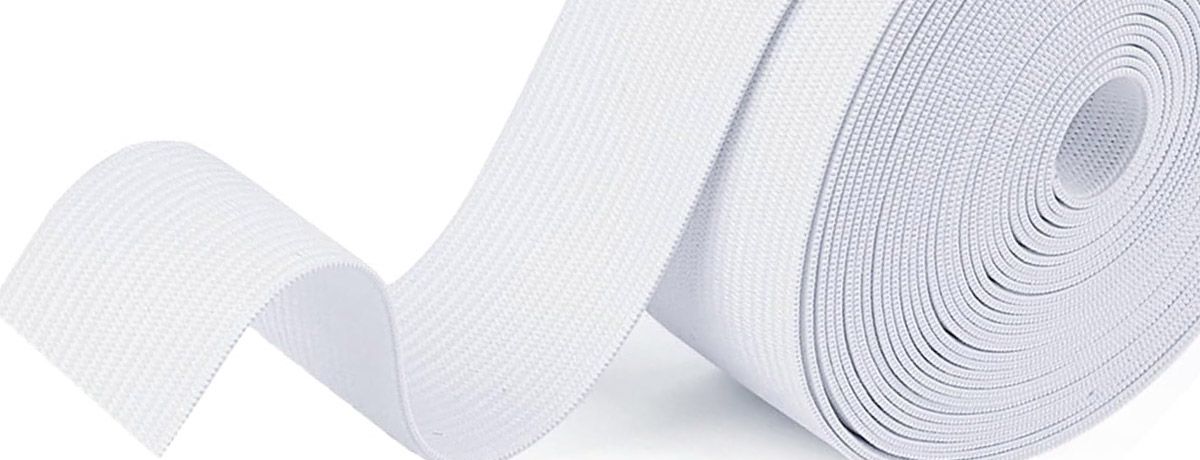
Elastic bands are made from rubber — natural, synthetic, or a blend of both — combined with textile fibres that control width, shape, and stretch recovery. Choosing the right material directly affects product durability, comfort, and compliance for garments, workwear, and accessories.
This guide answers the most common questions about elastic band composition, manufacturing, and B2B selection.
Key Takeaways
-
Most elastic bands use natural rubber for elasticity — not synthetic — despite 75% of rubber products globally being synthetic
-
Three construction types (braided, knitted, woven) serve different stretch and durability requirements
-
Material certification (OEKO-TEX, recycled content) is increasingly required by brand buyers
What Materials Are Elastic Bands Made Of?
Elastic bands combine two core materials: rubber (for stretch) and textile yarn (for structure and width). Despite synthetic rubber dominating 75% of global rubber product manufacturing, standard elastic bands are primarily manufactured with natural rubber because it offers superior elasticity and quality that synthetic alternatives do not fully match.
Natural rubber is harvested from Hevea brasiliensis trees as latex tapped from the rubber tree, mainly in Thailand, Indonesia, and Vietnam — which together account for 61% of global production — and these trees thrive in humid climates. It gives elastic bands their core stretch-and-recover performance.
Synthetic rubber (nitrile, neoprene, EPDM) is added when resistance to oils, chemicals, UV, or extreme temperatures is required. These variants appear in industrial, medical, and outdoor applications rather than standard garment elastic. In the manufacturing process, heavy-duty versions are often manufactured from synthetic compounds when harsher service conditions are expected.
Textile fibres — polyester, nylon, cotton, or elastane (Spandex), a synthetic polyurethane-polyurea copolymer widely used in textile elastic bands — are woven or braided around the rubber core as elastic bands are produced. They determine the band’s width stability, surface texture, and how it behaves when sewn into a seam. In the apparel industry, polyester/rubber blends are common in wash-and-wear clothing and waistbands, while nylon/spandex blends for activewear, underwear, and swimwear are softer and more moisture-resistant.
What's the Difference Between Natural and Synthetic Rubber Elastic Bands?
The main difference is performance context, and which material works best for a given rubber band depends on use conditions. Natural rubber bands stretch further and recover faster; synthetic rubber bands tolerate harsher environments, and most rubber bands for apparel still use natural rubber because it offers superior elasticity.
|
Property |
Natural Rubber |
Synthetic Rubber |
|---|---|---|
|
Elasticity |
High — preferred for garments |
Moderate |
|
Temperature resistance |
Limited |
Good (EPDM: –40°C to 150°C) |
|
Chemical/oil resistance |
Low |
High (nitrile) |
|
Biodegradability |
Yes — decomposes naturally |
No — takes centuries |
|
Typical applications |
Garments, lingerie, sportswear |
Industrial, medical, outdoor |
|
Cost |
Moderate |
Varies — generally higher for specialty grades |
For most apparel and textile production, natural rubber blends are the right choice, while elastane (Spandex) is a synthetic polyurethane-polyurea copolymer used heavily in textile elastic bands. Synthetic variants are worth specifying only when end-use conditions demand chemical or heat resistance.
Standard polyester/rubber blends, commonly used for wash-and-wear clothing and waistbands, are less suitable for swimwear or activewear because chlorine, saltwater, sunscreen, and high temperatures can shorten performance. Woven elastic suits structured waistbands, and pairing it with polyester-spandex stretch woven fabric or nylon/spandex blends and knitted elastic gives a softer feel, resists moisture well, and does not narrow as much when stretched.
How Are Elastic Bands Made?
How rubber bands are made follows a broader manufacturing process in three steps, regardless of rubber type:
-
Blending — Natural rubber starts as latex tapped from the rubber tree, then coagulated with formic acid before further processing; synthetic rubber is produced chemically. The material may be pressed into rubber slabs or large bales for storage or transport before it is manufactured into a solid compound with vulcanising agents (sulphur), plasticisers, and sometimes pigments. The ratio determines final hardness and stretch ratio.
-
Forming — In the rubber extrusion process, the compound is run through an extrusion machine into tubes or a long tube, which gives the material its general shape before it is sliced into multiple sections or little bands. Some rubber manufacturers also form flat stock for certain elastic constructions, but tube slicing is the classic method used to make bands. Width and thickness are set at this stage, and metal parts in the equipment help control consistency.
-
Vulcanisation — During the vulcanization process associated with Charles Goodyear, the rubber is heated in hot conditions and steamed so its molecules cross-link, locking in elasticity and durability. Without vulcanisation, rubber degrades rapidly with repeated stretching.
The finished rubber bands are then combined with textile structures depending on end use, and the quality of the curing and forming process affects durability; selecting the right trousers waistbands and waistband interlining is equally important for long-term garment performance.
The construction method — braided, knitted, or woven — shapes the band’s final performance profile. The tightness of the woven elastic type is ideal for structured waistbands, while knitted elastic is softer and does not narrow when stretched. Swimwear and activewear materials require resistance to chlorine, saltwater, heat, and sunscreen, which standard polyester-rubber blends cannot withstand.
Which Type of Elastic Band Suits Your Application?
MH produces three construction types for B2B buyers:
Braided elastic features a narrow-ridge surface and excellent flexibility. It narrows slightly under tension, making it best suited for lightweight applications: lingerie casings, light waistbands, and hat bands. Braided options also suit lighter various purposes where flexibility matters more than structure. Not recommended for direct sewing (the ridges can create uneven seams).
Knitted elastic has a smooth, flat surface that maintains consistent width even when stretched. It doesn’t narrow under tension, making it ideal for swimwear, compression garments, and any application where the elastic is sewn directly onto fabric without a casing. In apparel and close-to-body products, special rubber bands are often offered in various sizes depending on the application, and they are frequently paired with decorative embroidery thread options from MH to match brand styling and colour standards.
Woven elastic uses a parallel-ridge construction that stays firm and flat regardless of tension. It’s the heaviest and most durable type — standard for workwear waistbands, belts, and thick elastic applications requiring wash durability above 50 cycles. Its tighter construction also suits structured waistbands and more heavy duty uses.
For craft and decorative applications, printed or striped knitted elastics provide both function and visual detail.
Frequently Asked Questions
Are elastic bands biodegradable?
Natural rubber elastic bands biodegrade in soil over months to years. Synthetic rubber elastic bands do not — they can persist for centuries. Most recycling plants cannot process rubber effectively, so elastic bands are often not recycled in the traditional sense and are discarded in landfills, increasing their environmental impact. For sustainable sourcing, specify natural rubber content and request OEKO-TEX Standard 100 certification to confirm no harmful chemical residues.
What width elastic band do I need for garments?
Waistbands typically use 25–40mm wide elastic. Cuffs and hems use 10–20mm. Lingerie and delicate garments use 6–15mm. For workwear and industrial applications, 38–75mm woven elastic provides the strength and stability required.
Can elastic bands be made from recycled materials?
Yes. Recycled polyester yarn can replace virgin fibre in the textile component of braided and woven elastic, reducing the product’s carbon footprint. Request GRS (Global Recycled Standard) certification when sustainability compliance is a buyer requirement.
How do I specify elastic bands for a B2B order?
Provide: construction type (braided/knitted/woven), width in mm, weight in g/m, rubber content percentage, stretch ratio (e.g., 1:2 = stretches to twice its resting length), colour, and required certifications. MH Chine accepts custom specifications with MOQ from 500 metres per colour, and buyers can coordinate elastic trims with 150D/2 rayon embroidery thread for branding and decorative stitching.
What causes elastic bands to lose stretch over time?
Elasticity comes from tangled molecular chains acting like microscopic springs and is driven by entropy. In their relaxed state, the molecules are disordered, but stretching makes them more ordered. Exposure to UV light, ozone, high temperatures, and oils degrades rubber polymer chains, while aging leaves bands worn and more likely to break. Proper storage (cool, dry, away from sunlight) extends band life significantly. Industrial environments requiring chemical resistance should specify nitrile or EPDM synthetic rubber variants.
Many rubber bands are sold in various sizes for different applications.
Source Elastic Bands for Your Production
MH supplies braided, knitted, and woven elastic bands to garment manufacturers, workwear brands, and accessories producers across Europe, North America, and Asia. As a trusted supplier in the rubber industry, buyers often compare long-established rubber manufacturers such as Alliance Rubber Company before products are sold at scale. Custom widths, printed designs, and sustainable certified options are available.
Contact us browse our elastic band range to request specifications and pricing.