
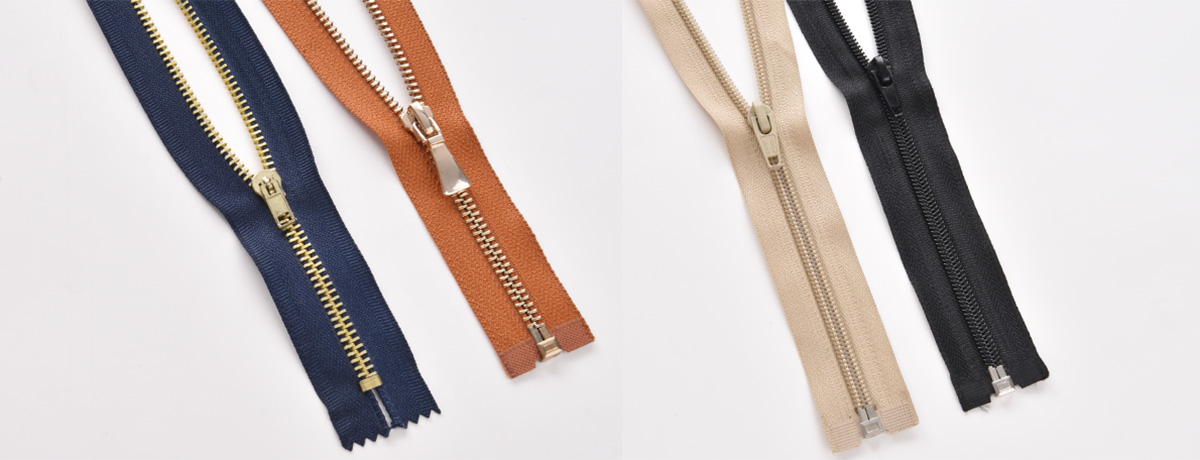
In a metal zipper vs nylon zipper decision, metal wins on rigidity, abrasion resistance and visual weight, while nylon coil wins on flexibility, low weight, corrosion resistance and color matching. That is why metal zippers dominate jeans, leather jackets, workwear and leather goods, and nylon coil zippers dominate sportswear, dresses, luggage, tents and outdoor gear. Most apparel and bag collections use both; the right zipper depends on fabric weight, where the closure sits, how the garment is washed, and how much the hardware is meant to show.
Key Takeaways
Metal zippers use individual brass, aluminum or nickel-plated teeth clamped onto the zipper tape. They are stiff, hard-wearing and visible by design.
Nylon coil zippers use a continuous spiral monofilament sewn to the tape. They are lighter, bend around curves and never rust.
Zipper size (#3, #5, #8, #10) roughly equals the closed chain width in millimeters, and the same numbers apply to both zipper types.
Metal suits denim, leather jackets, workwear, boots and leather goods; nylon suits dresses, sportswear, kidswear, luggage, tents, boat covers and upholstery.
Wet use and heavy garment treatment favor nylon; brass finishes need the wash process in mind to avoid tarnish or staining.
What Is a Metal Zipper?A metal zipper is a zipper chain made of individual teeth, each formed from metal wire and clamped onto a woven polyester or cotton zipper tape along the tape cord. When the slider moves up, the teeth interlock into a rigid, solid closure. The three common materials are:
Premium metal zippers also come with polished teeth, where each tooth is smoothed for a jewelry-like edge that runs more smoothly and looks better on leather goods and fashion outerwear. | 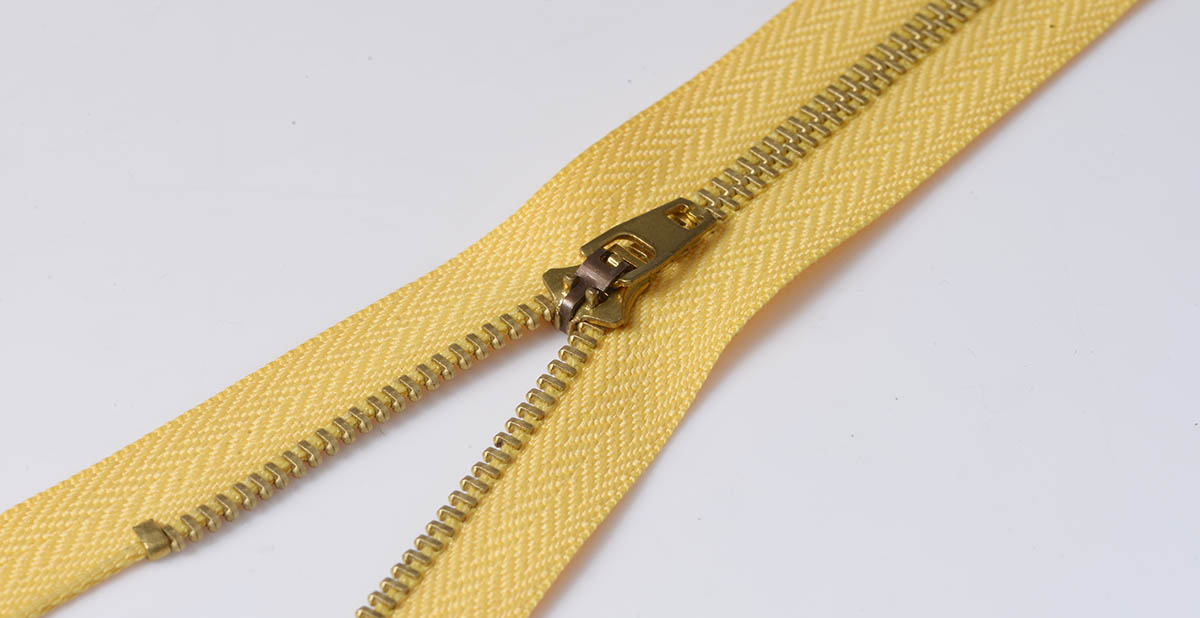 |
What Is a Nylon Coil Zipper?A nylon zipper, more precisely a nylon coil zipper, uses a continuous spiral of nylon (or polyester) monofilament stitched to the zipper tape. The coil forms the interlocking elements, so there are no separate teeth to bend or pull off. The main variants are:
Because the coil flexes, nylon coil zippers handle curved applications such as hoods, rounded bag openings and shaped pockets far better than metal. | 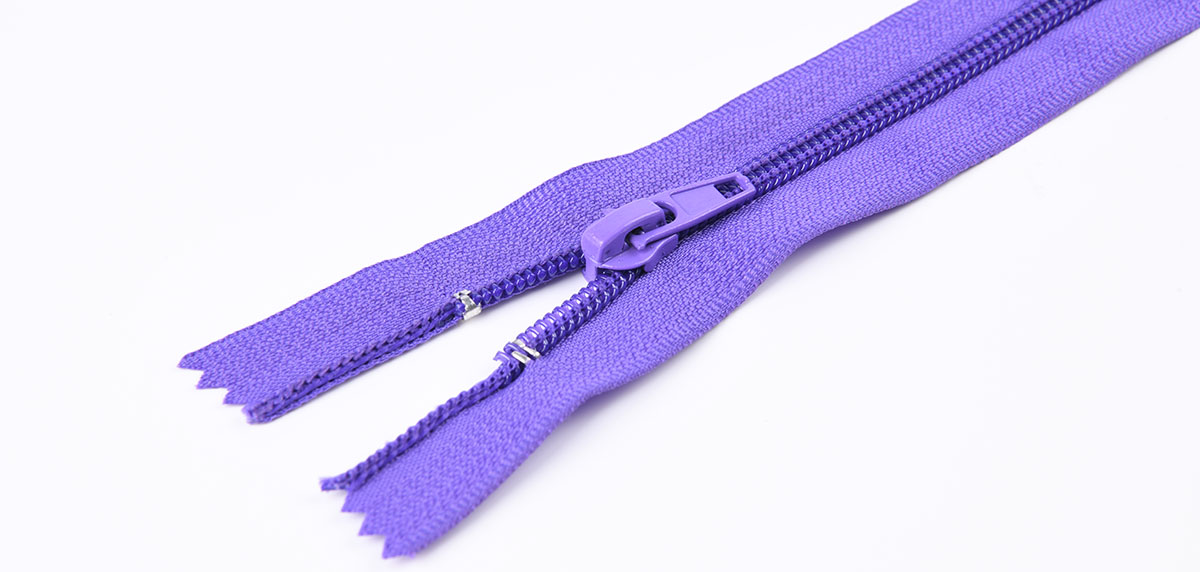 |
Metal Zipper vs Nylon Zipper at a Glance
Property | Metal zipper | Nylon coil zipper |
|---|---|---|
Element construction | Individual brass, aluminum or nickel-plated teeth clamped to the tape | Continuous nylon or polyester monofilament coil sewn to the tape |
Common sizes | #3, #4, #5, #8, #10 | #3, #5, #7, #8, #10 (invisible usually #3) |
Weight | Heavier, especially at #8 and #10 | Noticeably lighter at the same size |
Flexibility | Stiff; best on straight seams and stable wovens | Very flexible; follows curves and lightweight fabric |
Strength profile | High resistance to point loads, side pull and abrasion | Resists repeated bending; a split coil can often be closed again by re-running the slider |
Corrosion and moisture | Can tarnish or oxidize; finish must suit the garment treatment | Corrosion resistant; does not rust in water or salt air |
Color options | Limited to metal finishes and coatings | Tape and coil can be dyed to match the fabric |
Typical garment uses | Jeans, workwear, denim and leather jackets, boots | Dresses, skirts, sportswear, kidswear, lightweight jackets |
Typical bag and gear uses | Leather goods, handbags, premium accessories | Backpacks, luggage, tents, sleeping bags, boat covers |
Look | Bold, visible hardware | Clean, color-matched or fully concealed |
Strength and Durability
Metal zippers are the stronger choice where a closure takes direct strain. A jeans fly is pulled sideways every time the wearer sits; a leather jacket front is loaded when the wearer moves. Rigid metal teeth resist that side pull and resist abrasion from heavy denim, canvas and leather, which is why a #4 or #5 brass zipper is the long lasting performance standard for jeans and workwear. The trade-off is that a single bent or missing tooth can stop the whole zipper chain.
Nylon coil zippers spread load along the spiral instead of concentrating it on one tooth. That makes them durable under repeated zipper use and constant bending, such as a sleeping bag, a backpack lid or a tent door opened hundreds of times. They are less suited to hard point loads on very heavy fabric, but a heavy #8 or #10 coil zipper is standard on luggage and outdoor gear because it combines strength with flexibility.
Flexibility, Weight and Comfort
Metal teeth make the closure stiff. On light or stretchy fabric that stiffness shows as waving or puckering along the seam, so metal zippers are best on stable wovens. On jeans and leather jackets the stiffness is part of the expected feel.
Nylon coil zippers are lightweight and soft, lie flat on knit and light woven fabric, and run quietly. That suits sportswear, activewear, childrenswear and travel gear, where weight and comfort matter more than hardware presence. Invisible zippers go one step further and disappear into a dress seam entirely.
Appearance and Color Options
Metal zippers provide a high-end appearance. Golden brass, antique metal, black nickel and polished finishes act as visible design details on jeans, leather jackets, boots and leather goods, often paired with branded zipper sliders and pullers.
Nylon coil zippers offer far wider color options. Both the tape and the coil can be dyed to match the shell fabric, so a sportswear range in a dozen colorways can have a zipper in every shade. Zipper sliders on coil zippers range from standard and auto lock to double pull and non-lock versions for outerwear, bags and tents.
Which Zipper Type for Which Product?
Jeans, Trousers and Skirts
Metal zippers are standard for jeans and heavy casual trousers, typically a #3 to #5 brass or aluminum non separating zipper with a locking slider. Lighter fashion trousers and skirts usually take a #3 invisible nylon zipper for a concealed closure.
Jackets and Outerwear
Denim jackets, leather jackets and workwear use #5 to #8 metal separating zippers for strength and a bold look. Sports jackets, down jackets and softshells use nylon coil or reverse coil zippers, and rainwear uses waterproof coil with a coated tape. Two-way and double pull separating zippers are common on long coats.
Dresses and Fashion Tops
Invisible #3 nylon zippers are the default for dresses and blouses, especially those made from lightweight chiffon fabric and other delicate materials. An exposed metal zipper on a dress or top is a deliberate design detail and usually uses a polished or antique metal finish.
Bags, Luggage and Outdoor Gear
Handbags, leather goods and fashion backpacks often use #5 to #8 metal zippers for a premium finish, paired with carefully chosen bag and luggage accessories such as straps, buckles and wheels. Travel backpacks, suitcases, sports bags, tents and sleeping bags use #8 to #10 nylon coil zippers for weight, flexibility and corrosion resistance.
Upholstery and Home Textiles
Cushion covers, sofa cushions and mattress covers use nylon coil zippers, often supplied as long chain cut to length with separate sliders, while curtain grommets and eyelet rings are used alongside zippers in coordinated window treatments. Concealed zippers keep the opening out of sight.
Zipper Size: #3, #5, #8 and #10
Zipper size is set by the width of the closed elements, and the number roughly equals that width in millimeters, the same for metal and nylon. A #3 is light and fine, a #5 is the all-round size for jackets, trousers and bags, and #8 and #10 are heavy sizes for coats, luggage, tents and industrial applications. Exact widths vary slightly by manufacturer. For a step-by-step method, see how to size a zipper and our overview of the parts of a zipper.
Metal and Nylon Zippers from MH
The metal-or-nylon question rarely has one answer across a whole collection. A denim program may need a brass jeans fly, a nickel-free brass jacket front, a #5 coil pocket zipper and an invisible zipper for the matching skirt, all in the same delivery. Ningbo MH covers both sides of this comparison in one catalog. Its metal zippers include golden, nickel, antique and black nickel brass, aluminum, nickel-free brass and flame-retardant metal zippers in #3 to #10. Its nylon zippers run from fine invisible coil to #10 double-slider tent zippers, alongside waterproof zippers, long chain and zipper sliders.
Founded in Ningbo in 1999, MH works with 9 factories across about 350,000 m², more than 3,000 employees and 2,000+ partner manufacturers, and ships to buyers in 150+ countries. Because zippers sit next to sewing thread for industrial production, tapes and fabrics among its roughly 10,000 sewing materials, a garment maker can source the zipper and the materials it is sewn to from one supplier, under the MH and TWO BIRDS trademarks, and explore the full range of MH zipper solutions for different garment and gear applications.
Ask MH about metal and nylon zippers →
Frequently Asked Questions
Which is better, a metal or nylon zipper?
Neither is better overall. Metal zippers are better for heavy fabrics, high side pull and a visible premium look, such as jeans, workwear and leather jackets. Nylon coil zippers are better for light weight, flexibility, curved seams, wet conditions and color matching, such as sportswear, dresses, luggage and outdoor gear.
Are nylon coil zippers good?
Yes. Nylon coil zippers are durable, flexible, lightweight and corrosion resistant, and a misaligned coil can often be closed again by running the slider back over it. Heavy #8 and #10 coil zippers are standard on luggage, backpacks and tents.
Are brass zippers good?
Yes. Brass is the strongest common zipper metal and resists corrosion better than aluminum, which is why it is the standard for jeans and heavy jackets. Its finish can tarnish over time or react to aggressive washing, so the plating is chosen to suit the garment treatment.
Is a #5 or #10 zipper bigger?
A #10 zipper is bigger. The size number roughly equals the closed width of the zipper elements in millimeters, so a #10 is about twice as wide as a #5 and is used on heavy coats, luggage and tents.
What kind of zipper is used for a jacket?
Jackets use separating zippers. Denim, leather and workwear jackets usually take a #5 to #8 metal zipper; sports jackets, down jackets and softshells usually take a #5 to #8 nylon coil or reverse coil zipper, and rainwear takes a waterproof coil zipper.
What is the difference between a metal and a plastic zipper?
A metal zipper has metal teeth; a plastic zipper has either a nylon coil or molded plastic teeth. Molded plastic zippers look similar to metal but are lighter and rust-free, while nylon coil zippers are flatter and more flexible than either.
Conclusion
The metal zipper vs nylon zipper choice comes down to the product: metal where strength, abrasion resistance and visible hardware define the item, nylon coil where weight, flexibility, moisture and color matter more. Matching the zipper type and size to the fabric and the end use keeps closures working for the life of the garment or bag. For related reading, see nylon zippers, aluminum zippers, invisible zippers and waterproof zippers.